- Legal Landscape: Understanding UK regulations concerning trump cannabis reclassification & uk legalisation explained is vital for consumers and patients navigating compliance.
- Regulatory Thresholds: In the UK, industrial hemp products must comply with strict non-detectable THC thresholds and applicable licensing.
- Consumer Rights: Staying informed on statutory drug laws helps protect personal safety and ensure responsible purchasing decisions.
Comprehensive UK guide covering trump cannabis reclassification & uk legalisation explained. Learn verified facts, British legal status, harm reduction guidelines, and safe buying practices with next-day UK delivery.
UK Legalisation: What Could It Mean?
Cannabis policy continues to evolve around the world, with governments increasingly reviewing legislation in light of emerging scientific evidence, medical research and changing public attitudes.
One of the most widely reported developments came from the United States, where proposals were announced to reclassify cannabis under federal law. While this does not legalise recreational cannabis across America, it represents a significant shift in how cannabis is viewed at a federal level.
For people following cannabis policy in the UK, the obvious question is whether international developments could influence future discussions surrounding British legislation.
What Was Proposed in the United States?
For many years, cannabis has been classified as a Schedule I controlled substance under US federal law, placing it alongside substances considered to have no accepted medical use.
The proposed change would move cannabis into Schedule III, recognising that cannabis has accepted medical applications while reducing some of the regulatory barriers affecting research and the legal cannabis industry.
The proposal does not legalise recreational cannabis across the United States, as individual states continue to determine their own cannabis laws.
Why Is Trump Cannabis Reclassification Significant?
Although reclassification is not the same as legalisation, it could have important consequences.
Potential impacts include:
- Greater opportunities for scientific research.
- Improved access to cannabis-based medicines.
- Reduced regulatory barriers for licensed businesses.
- Further recognition of cannabis within mainstream healthcare discussions.
Many commentators view reclassification as another step in the gradual evolution of cannabis policy rather than a complete legal overhaul.
Why Does This Matter to the UK?
International developments often influence policy discussions in other countries.
The United Kingdom has already legalised specialist prescription cannabis-based medicines in certain circumstances, although access remains limited.
As more countries review their legislation, comparisons between different regulatory approaches naturally become part of public and political debate.
Current Cannabis Law in the UK
At the time of writing:
- Recreational cannabis remains illegal.
- Cannabis is classified as a Class B controlled drug.
- Certain cannabis-based medicinal products may be prescribed by specialist clinicians.
- CBD products are available provided they comply with applicable UK regulations.
Understanding the distinction between recreational cannabis, prescribed medicines and legal hemp-derived cannabinoid products is important when discussing UK legislation.
Could UK Law Change?
There is currently no confirmed timetable for legalising recreational cannabis in the United Kingdom.
However, several factors continue to drive discussion, including:
- International policy developments.
- Medical research.
- Economic considerations.
- Public opinion.
- Criminal justice reform.
Whether these discussions eventually result in legislative change remains uncertain and would require parliamentary approval.
The Global Trend
Many countries have adopted different approaches to cannabis regulation.
Examples include:
- Medical cannabis programmes.
- Decriminalisation.
- Pilot regulatory schemes.
- Adult-use legal markets.
Each jurisdiction has developed its own regulatory framework, reflecting different legal, political and public health priorities.
What Does This Mean for Consumers?
Regardless of international developments, UK consumers should continue to ensure they understand current domestic legislation.
Consumers should:
- Purchase products only from reputable suppliers.
- Look for independent laboratory testing.
- Understand the difference between CBD, CBG and THC.
- Stay informed about changes in legislation.
You can learn more in our UK Compliance & Laboratory Testing guide.
Related Guides
- CBD & The Entourage Effect
- What Is CBG?
- UK Compliance & Laboratory Testing
- Legal Herbal Products
- Cannabis Solids
- Frequently Asked Questions
Frequently Asked Questions
Is recreational cannabis legal in the UK?
No. Recreational cannabis remains illegal under current UK legislation.
What is cannabis reclassification?
Reclassification changes how a substance is categorised under drug legislation. It does not necessarily legalise recreational use.
Does US policy automatically affect UK law?
No. The UK has its own legal system and drug policy. However, international developments may contribute to future policy discussions.
Is medical cannabis legal in the UK?
Specialist doctors may prescribe certain cannabis-based medicinal products in limited clinical circumstances.
Could cannabis become legal in the UK?
Future legislative change is possible, but there is currently no confirmed timetable for recreational legalisation.
What products are currently legal to buy?
Consumers can purchase hemp-derived cannabinoid products that comply with UK legislation, including qualifying CBD and CBG products from reputable suppliers.
Final Thoughts
International cannabis policy continues to evolve, and developments in major economies inevitably influence wider public discussion.
While the UK’s legal framework remains unchanged, continued scientific research, international experience and public debate are likely to shape future conversations surrounding cannabis regulation.
Further Reading
Compliance Statement
This article is provided for educational and informational purposes only. It discusses international cannabis policy developments and current UK legislation. It does not encourage the use, possession or supply of illegal controlled substances and should not be interpreted as legal or medical advice.
Related Educational Guides
 UK Compliance & Law
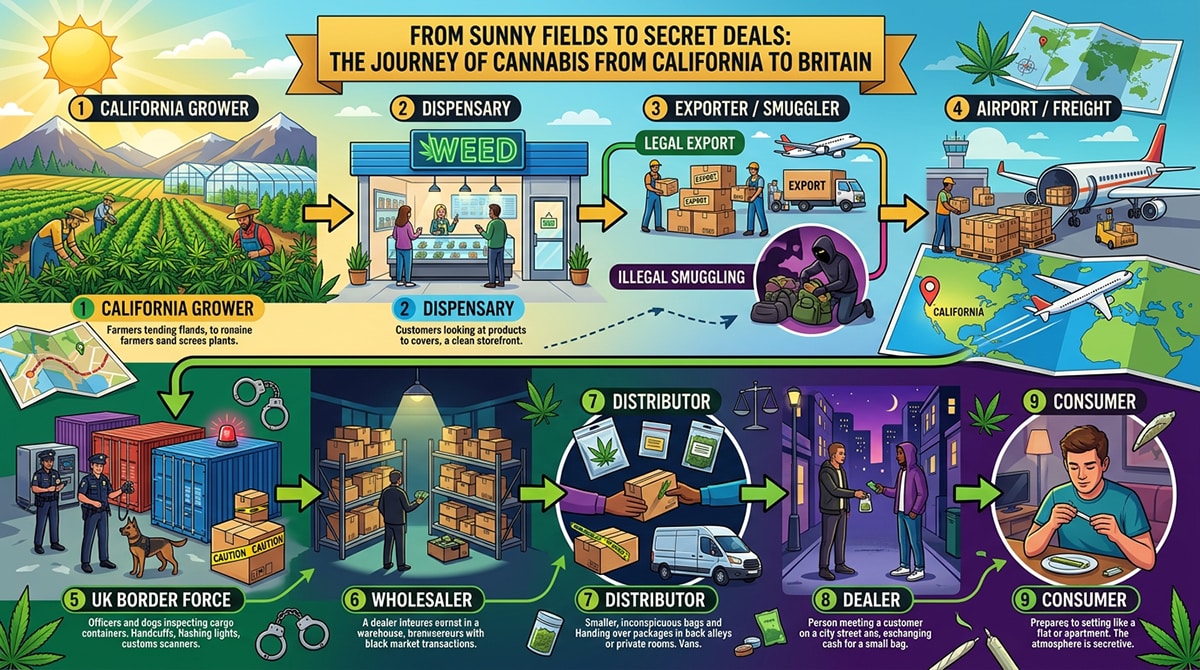
 How Illegal Cannabis Travels From California to the UK
From California to the UK Published: 18 June 2026 Last Updated: 27 July 2026 Last Reviewed: 27 July 2026 Author: Prime Pharma UK Editorial...
UK Compliance & Law Will the Green Party Legalise Cannabis in the UK? Policy Explained
Will the Green Party Legalise Cannabis in the UK? Published: 27 February 2026 Last Updated: 27 July 2026 Last Reviewed: 27 July 2026 ...
UK Compliance & Law How to Buy Cannabis Online in the UK (2026 Guide) | Stay Safe
How to Buy Cannabis Online in the UK Published: 8 March 2026 Last Updated: 27 July 2026 Last Reviewed: 27 July 2026 Author: Prime Pharma UK...